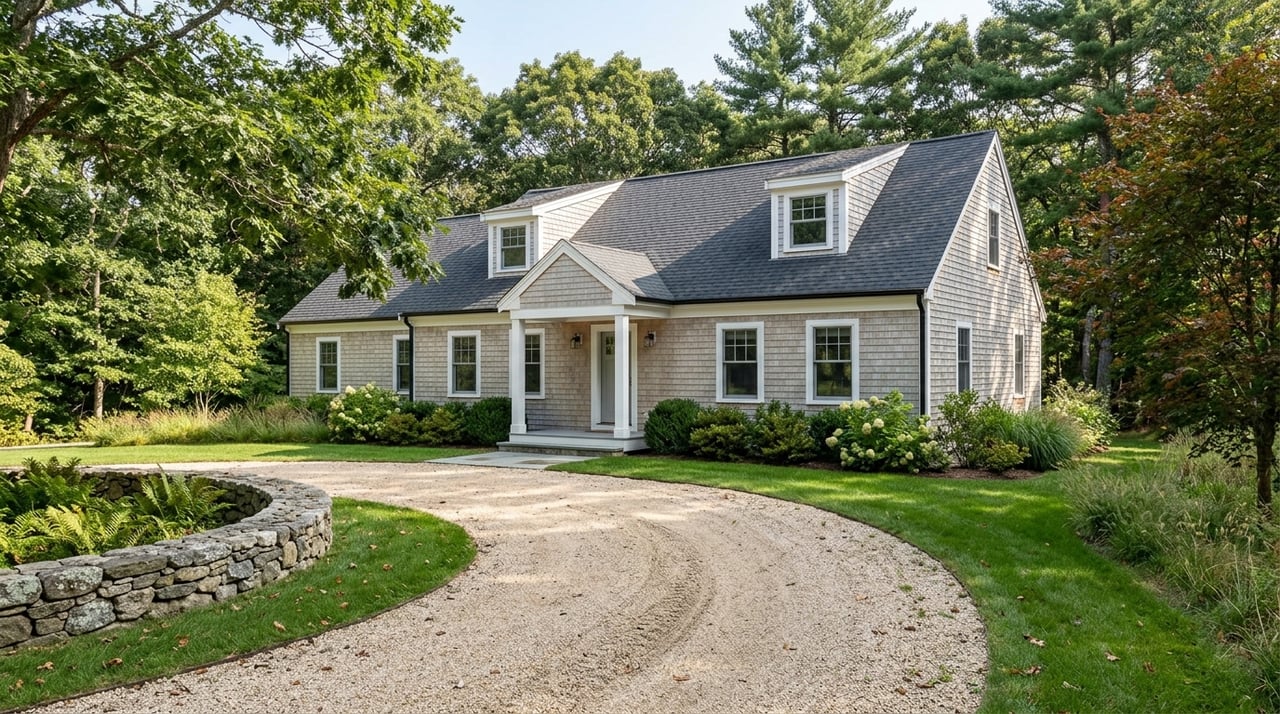
Dreaming about a country home with room to breathe in Fairfield County? Easton stands out because it offers a rare mix of larger parcels, preserved land, working farms, and a rural setting that feels distinct from denser nearby towns. If you are thinking about buying acreage here, it helps to understand what those extra acres really mean in practice, from zoning and buildable area to maintenance and long-term value. Let’s dive in.
Why Easton draws acreage buyers
Easton appeals to buyers who want space, privacy, and a more rural pace without leaving Fairfield County. According to the town, Easton has more than 20 working farms, and more than one-third of its land is permanently preserved as open space. The town’s open-space resources note 7,724 acres of protected land, which helps shape the low-density feel many buyers are looking for in a country-home setting.
That preserved character is a big part of the value. When you buy in Easton, you are not just buying a house and a lot. You are also buying into a town pattern that emphasizes open land, farmland, and conservation. You can explore that backdrop through Easton’s trails, recreation, and open-space resources.
What acreage means in Easton
Acreage in Easton can look straightforward at first glance, but the usable portion of a property is often more important than the total number of acres. Easton’s zoning regulations are built around larger parcels, and those rules can have a major impact on what you can do with the land.
In Residence A, the minimum lot area is 40,000 square feet. In Residence B, the minimum lot area is 3.0 acres. Both districts require 200 feet of frontage, 50-foot front setbacks, 40-foot side and rear setbacks, and maximum coverage limits of 15% building coverage and 25% total coverage under the Easton zoning regulations.
Buildable area matters more than gross acreage
This is one of the most important things to understand before you buy. A parcel may be large on paper, but wetlands, watercourses, waterbodies, and steep slopes can reduce the practical building envelope.
Easton’s regulations state that no more than 33% of the area used in coverage calculations may include those constrained features. For you as a buyer, that means two 3-acre properties can function very differently depending on the site. One may have a generous open yard and easy access, while another may have significant natural constraints that affect additions, outbuildings, driveway changes, or other improvements.
Conforming and nonconforming lots
You will also want to confirm whether a property is conforming under current zoning or if it is an older, nonconforming parcel. That distinction can affect future flexibility and should be part of your due diligence early in the process.
This is especially important if you are considering vacant land, an older home on acreage, or a property where you may want to expand later. Reviewing zoning details alongside public records can help you avoid surprises after contract.
Easton supports an agricultural setting
Easton’s zoning reflects the town’s farm and open-space identity. That matters if you are buying acreage because it helps explain why the town feels the way it does and why certain rules are more restrictive than in other places.
For example, a caretaker cottage is allowed only on properties of at least 10 acres, and a farm store must be accessory to a farm of at least 25 acres under the zoning code. The town also explains that PA 490 farm, forest, and open-space classification may allow qualifying land to be assessed based on current use, but that classification does not override zoning, conservation, building, or health rules.
Ask how the land is classified
If you are buying a larger tract, ask whether any portion of the property is currently classified under PA 490. That can be a useful piece of the ownership picture, but it is not a shortcut around local rules.
You should also verify whether the property’s current use aligns with your plans. If your goal is simple residential enjoyment, that may be straightforward. If you are thinking about land-intensive uses or future changes, a closer review is wise.
Housing stock ranges from historic to limited newer inventory
Easton’s housing inventory includes homes from many eras, and that variety is part of the town’s appeal. The town’s historical resources note that Easton has 154 historic homes, with some dating back to the 1700s. That means you may encounter anything from antique houses with original character to renovated properties and a smaller number of newer homes.
The town’s Plan of Conservation and Development also shows slow housing growth in recent years. After 2010, Easton added only a little over 5 housing units per year, compared with around 25 per year in the 1990s and 2000s and about 37 per year in the 1970s and 1980s. In practical terms, that points to relatively limited new supply and a market where available country homes can be a mix of older residences, updated homes, and occasional infill opportunities.
Price expectations for Easton acreage homes
If you are trying to set expectations, town records offer helpful context. Easton’s town plan reported a 2015 median sales price of $645,900, while an older annual report cited a median sales price of $545,000 in fiscal year 2010-2011.
More recent appraisal materials offer a useful snapshot for acreage-related properties. One town appraisal report shows an 18.32-acre vacant residential parcel on Eden Hill Road selling for $565,000 in 2021, and another shows a 3.03-acre vacant parcel on Tuckahoe Road selling for $270,000 in 2021. A separate residential appraisal report for a 3.4-acre subject used Easton comparable home sales at $613,900, $618,900, $875,000, and $903,000 on 3- to 6-acre parcels, according to the town’s appraisal materials.
Think in ranges, not just averages
For country-home buyers, broad market averages only tell part of the story. In Easton, value often depends on the balance of house condition, acreage usability, location within town, and the degree of site constraints.
A home with 4 acres of open, usable land may offer a very different ownership experience than a similar house on a parcel with substantial wetlands or steep topography. Looking at the land as carefully as the house is one of the smartest ways to evaluate value here.
Lifestyle value goes beyond the lot lines
Part of Easton’s appeal is what surrounds your property. The town offers access to open-space destinations like Centennial Watershed State Forest, Mill River Open Space, Paine Open Space, Steep Hill Open Space, and Aspetuck Park through its local open-space listings.
Aspetuck Land Trust adds even more context with Easton preserves such as Pond View Preserve, Island Pond Preserve, Poindexter Nature Preserve, Warner Anglers Preserve, Kupinse Preserve, Crow Hill, Jump Hill, and Trout Brook Valley Preserve, which the trust describes as a 1,009-acre conservation area with 14 miles of trails.
Farms and farm stands shape daily life
Easton’s farm culture is also part of everyday living. The town’s farm map highlights more than 20 working farms and farm stands, including Silverman’s Farm, Sherwood Farm, Sport Hill Farm, Maple Row Growers, and others.
For many buyers, that adds a practical and enjoyable dimension to country living. The setting is not just scenic. It is active, working land that continues to shape the character of the town.
Due diligence is essential for acreage purchases
Buying a country home on acreage usually requires a deeper review than buying a standard suburban lot. In Easton, public records can make that process more manageable if you know where to look.
The Town Clerk states that online land records and maps are available from 1979 to the present, and the Assessor provides online property cards. Those tools can help you research prior transfers, parcel maps, and property characteristics through the town’s land records and clerk resources.
A smart Easton acreage checklist
Before you move forward, focus on questions like these:
- How much of the lot is actually usable after setbacks and natural constraints are considered?
- Is the parcel conforming under current zoning?
- Do wetlands, watercourses, or steep slopes limit future plans?
- What do the assessor card and recorded maps show?
- Is any part of the property classified under PA 490?
- How will driveway access, land clearing, and ongoing maintenance affect ownership?
Land ownership comes with upkeep
One of the biggest adjustments for buyers moving into a country setting is that you are caring for more than the house. You are also taking on the condition, access, and management of the land itself.
That matters in Easton, where wooded acreage is common. The town’s fire marshal has warned that brush-fire risk can increase enough to trigger no-open-burning periods, which is a reminder that deadwood, tree cover, and general land maintenance are important parts of ownership. In other words, acreage can be rewarding, but it works best when you budget for stewardship as well as purchase price.
How to buy with confidence in Easton
The right Easton property can offer privacy, open space, and a true country-home feel that is hard to find elsewhere in Fairfield County. The key is making sure the acreage matches your goals, whether that means more outdoor space, a particular home style, or long-term flexibility.
If you want experienced guidance as you compare Easton homes, land features, and public-record details, The John Hackett Team can help you approach the search with clarity and confidence.
FAQs
What should you check before buying acreage in Easton?
- Review zoning, setbacks, frontage, wetlands, steep slopes, assessor records, and land records so you understand how much of the parcel is truly usable.
How large are residential lots typically required to be in Easton?
- Easton zoning includes a Residence A district with a 40,000-square-foot minimum lot area and a Residence B district with a 3.0-acre minimum lot area.
How do wetlands affect an Easton country-home purchase?
- Wetlands and related site constraints can reduce the practical buildable area of a property, even when the total acreage appears substantial on paper.
Are historic homes common in Easton?
- Yes. The town states that Easton has 154 historic homes, and many date back to the 1700s, which contributes to a housing stock that spans many eras.
What lifestyle features make Easton attractive for country-home buyers?
- Easton offers preserved open space, trail systems, land trust preserves, and more than 20 working farms and farm stands that support its rural character.
Where can you research Easton property records before making an offer?
- The Town Clerk provides online land records and maps from 1979 to the present, and the Assessor offers online property cards for parcel-level research.